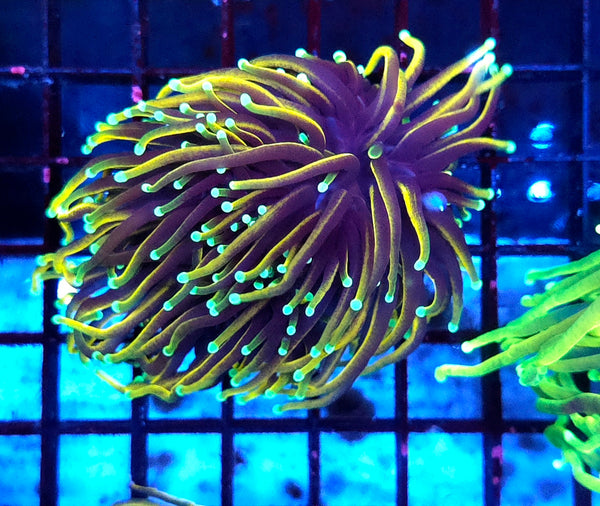
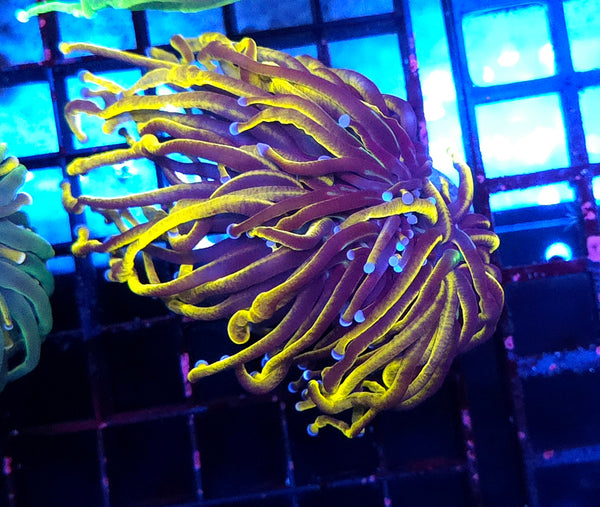
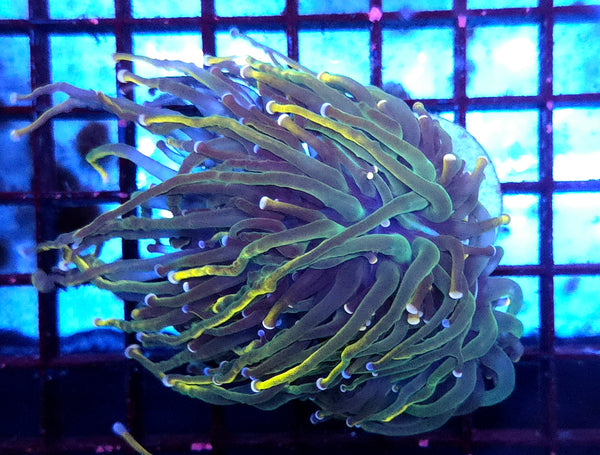
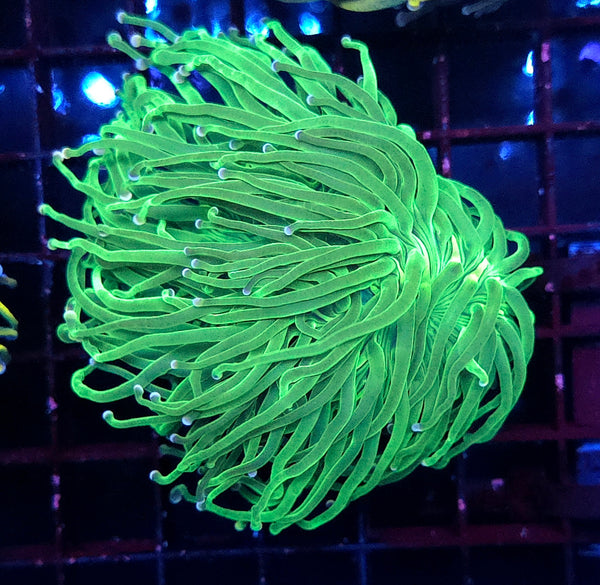
Euphyllia Torch Coral Care: Why Flow Matters
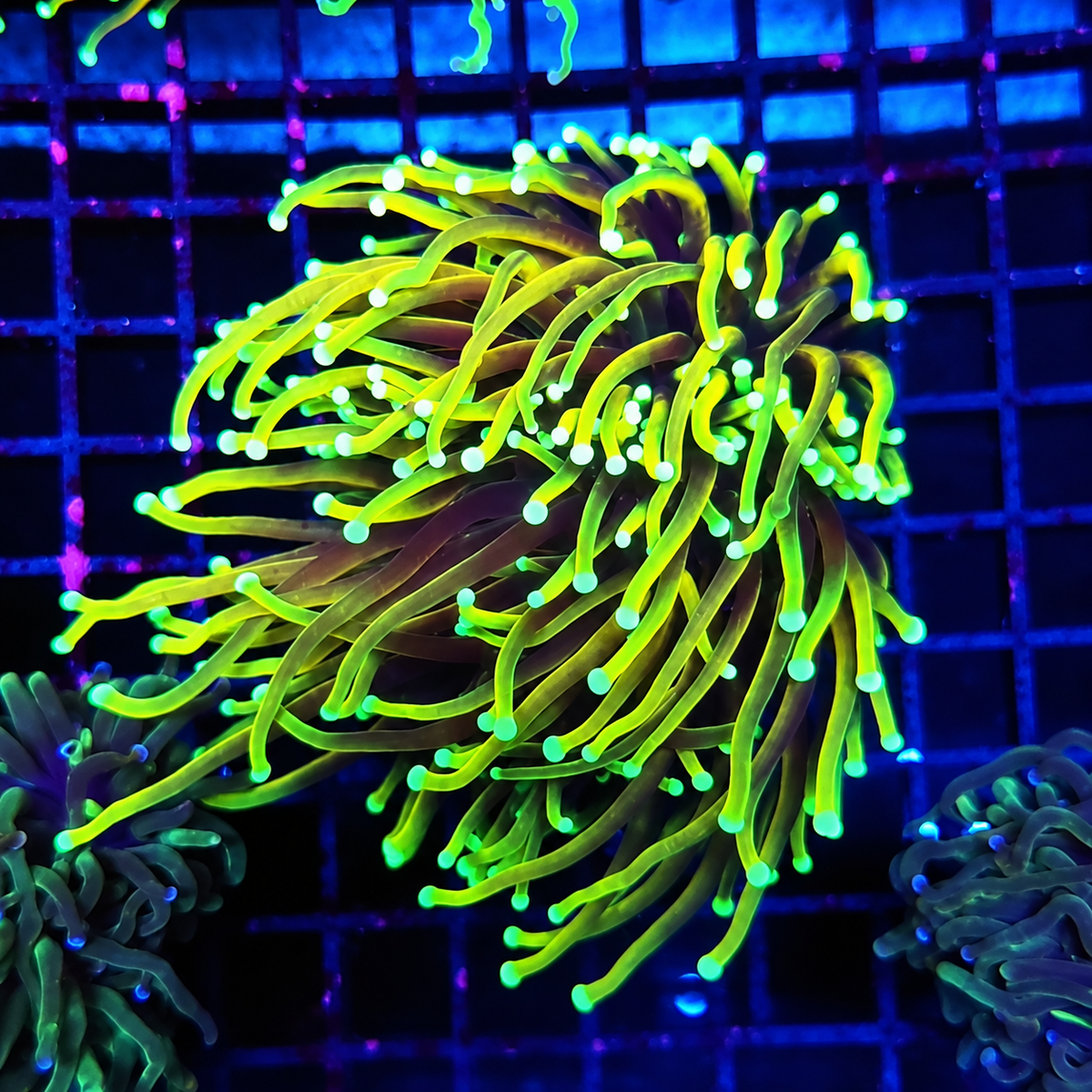
Flow is one of the first things we check when a Torch coral has problems. Its long tentacles look beautiful as they move in the water, but they do not tolerate constant pressure from a pump aimed directly at them. Choosing the right position makes a real difference with these corals.
The Torch should feel the flow, not the pump jet
Place the coral where the water reaches it indirectly. If your pump moves water across the top of the tank, a suitable return flow may form lower down or on the other side. This is where the water moves back after being redirected.
You can tell whether the position is suitable by watching the coral. The tentacles should move without being held rigidly to one side or pressed against the skeleton. Observe it during the different phases of your pump programme.
We cannot give you one fixed pump setting for this. The same percentage will create very different flow in a small tank and a large one. Rockwork and the distance from the pump also change how the water moves.
Too little flow is not good either
Do not simply place the Torch in a corner with almost no water movement. Deposits can collect there. In our experience, flow that is too weak can also contribute to problems.
You are looking for a position with good water exchange but no hard, direct jet. Before reducing the flow throughout the entire aquarium, check whether the coral would be better placed somewhere else.
In our experience, Hammer corals are usually a little more forgiving when it comes to flow. A setting that works well for your Hammer may still be unsuitable for a Torch right next to it.
Light and distance from other corals
A Torch does not need to sit in the brightest part of the aquarium. Acclimate a new coral to your lighting gradually instead of placing it directly under the light after transport.
Leave enough space between it and its neighbours. The distance between the frag plugs is not the only thing that matters: the long tentacles must not be able to reach other corals. Check the distance again after changing a pump setting.
Nitrate and phosphate: do not drive them down to zero
Torch corals need nutrients. Measure nitrate and phosphate regularly, especially if you use heavy filtration or a phosphate remover.
As a rough guide, you can use around 5–10 mg/l nitrate and around 0.08–0.12 mg/l phosphate. These are not rigid limits for every Torch. If your coral is growing well and your values are stable, do not start dosing or filtering aggressively just to reach a particular number.
If a test no longer detects a nutrient, first check the measurement and review your current care routine. Do not add several different products at the same time.
Keep alkalinity stable
Alongside flow, stable alkalinity (KH) is especially important. Test regularly and look at the trend. One suitable reading tells you very little about whether alkalinity fluctuated during the previous days.
If you see an unexpected change, check the measurement first and then the dosing. Is the dosing pump working correctly? Is there still solution in the container? Did anything change after a water change? Do not make a large correction based on a single unusual result.
Keep an eye on calcium and magnesium as well. Dose according to the actual needs of your aquarium, not simply because one coral remains closed.
If the Torch does not open properly
First ask when the problem began. Has the coral only just arrived? Did you change the lighting or flow? Check its position and your current water values before treating anything.
Take a close look at the tissue and the area where it meets the skeleton. Flatworms can be a factor with Euphyllia. A closed coral on its own, however, does not prove that flatworms are present. Take sharp photographs of anything unusual, preferably under white light.
If tissue is detaching, brown slime appears or the coral deteriorates quickly, do not wait for days. Contact us and include photographs. Repeated dips or several different treatments used on suspicion can place the coral under additional stress.
Send us a short flow video
If you are unsure about the position, film the Torch while the pumps are running. Together with your current water values, this helps us assess the situation more accurately. You can reach us at info@coralprime.de.
For newly delivered animals, read our guide to acclimating corals after shipping. You can find our currently available corals in the Euphyllia collection.