Buying WYSIWYG Corals: Assess Photos, Size and Condition
Read WYSIWYG listings with confidence: identify the exact specimen, compare size and space requirements, and understand colours under different lighting.
Read guide
Lower light and gentle to moderate flow. Avoid heavy shading from other corals.
VAT included, plus shipping costs.
Your question will be linked automatically to Trachyphyllia Rainbow WYSIWYG / 1981.
Trachyphyllia Rainbow – Trachyphyllia LPS coral with fleshy tissue and a free-living skeleton.
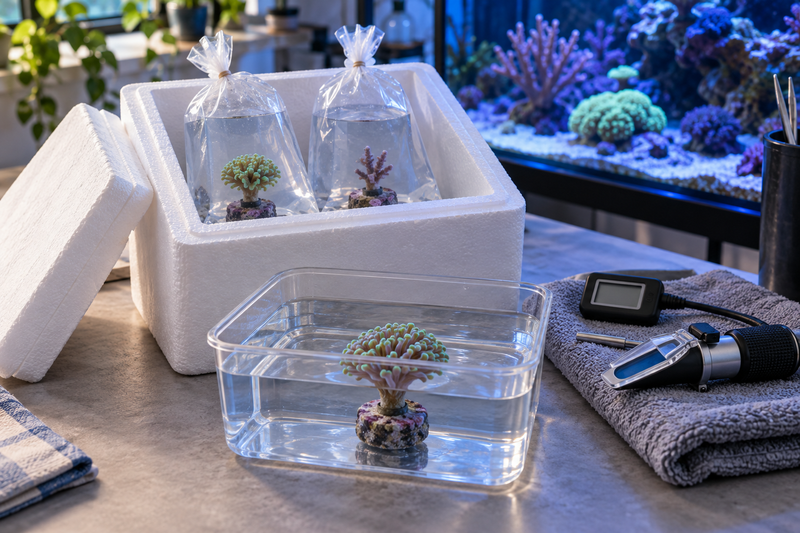
You receive the exact specimen shown in the original photographs. Specimen 1981. The photographs were taken under blue aquarium lighting; colours can look different under your own lighting.
Size stated in the offer: 11 x 11 cm.
Light: low to moderate; acclimate gradually and initially avoid a strong direct light hotspot. Flow: gentle and indirect; flow must not continually press the soft tissue against the skeleton edges.
Place on clean soft sand low in the tank; avoid sharp rock and keep clear of stinging neighbours.
Occasionally offer small marine food pieces when feeding tentacles are extended; do not overfeed or force large pieces.
Handle the skeleton when moving the coral and avoid crushing inflated tissue. Give a newly retracted specimen a quiet place; investigate persistent tissue loss.
As a general reef starting point: 24–26 °C, salinity 34–35 PSU, alkalinity 7–8.5 dKH, calcium 410–450 mg/l and magnesium 1,250–1,400 mg/l. Stability matters more than abruptly chasing a number. Avoid complete nutrient depletion and check trends rather than reacting to a single reading.
For a consistent testing routine, see our reef water testing guide.
Read WYSIWYG listings with confidence: identify the exact specimen, compare size and space requirements, and understand colours under different lighting.
Read guideThree popular fleshy LPS corals compared: how to choose a sheltered position, gentle flow and a steady start in a reef aquarium.
Read guideYour corals have arrived. This practical step-by-step guide explains how to prepare, inspect the animals, compare temperature and salinity, use dips carefully, and monitor the first few days.
Read guide