Best Corals for Beginners: What Really Suits Your Reef Tank?

Would you like to add your first corals but are unsure which ones will suit your aquarium? Start by looking at the tank itself: How strong are the lighting and flow, how stable are the water values, and how much space is available? Once you know that, it becomes much easier to narrow down the options.
Which corals are suitable for beginners?
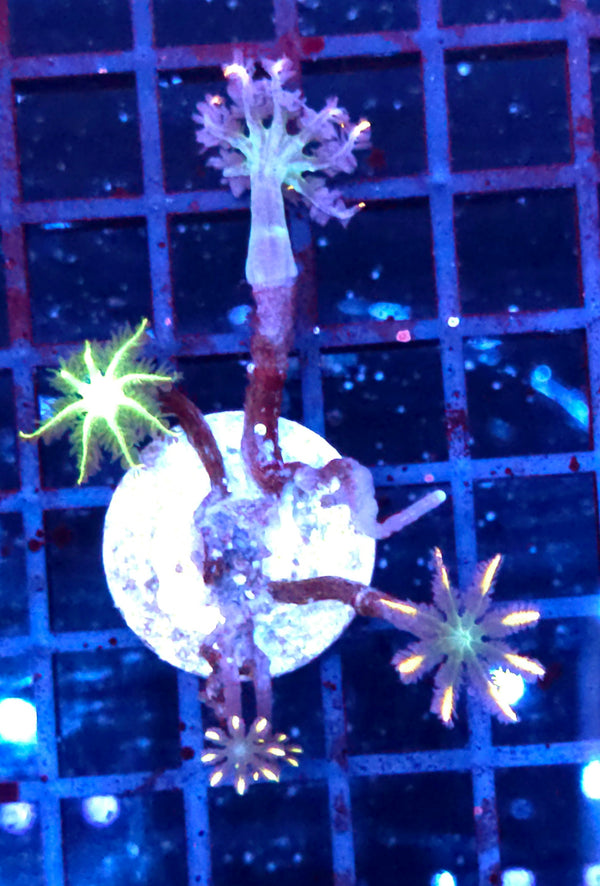
Leather corals such as Sarcophyton can be a good place to start. They are relatively hardy, but they still need a suitable position and enough room to grow. A small frag may take up considerably more space later.
A leather coral may remain closed while it sheds its surface layer. That does not automatically mean something is wrong. Check whether the tissue looks healthy and whether the flow can carry away the loosening layer.
You will find different species in our soft coral collection. Read the description of the individual product as well: not every soft coral has the same requirements.
Should you choose a Hammer coral or a Torch?
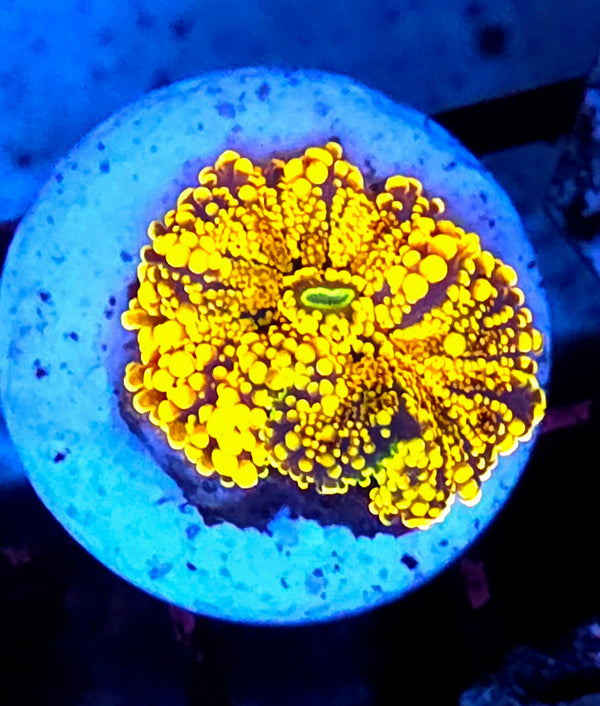
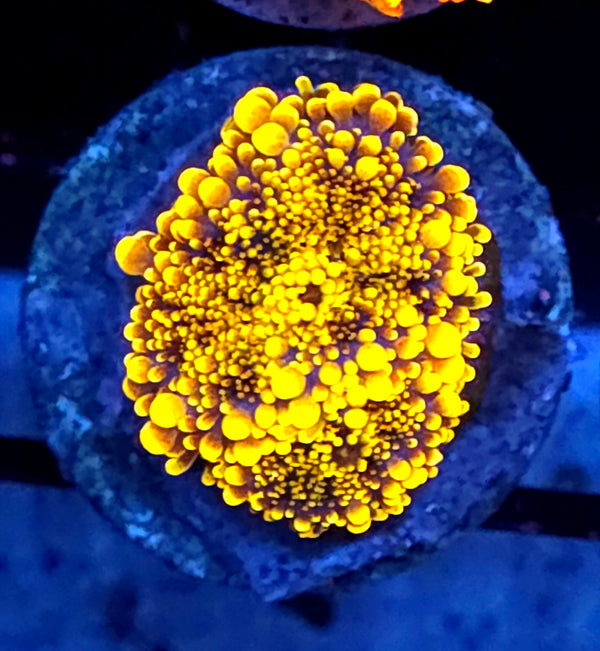
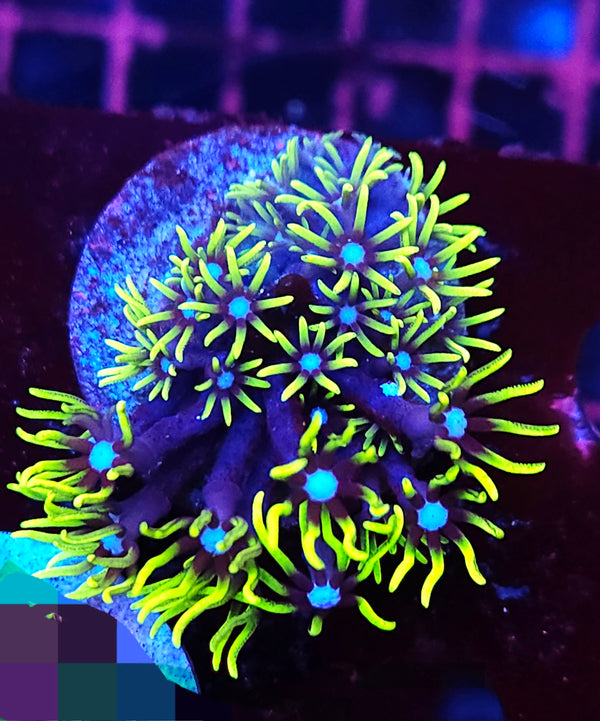
If you like corals with long, moving tentacles, Hammer corals and Torches often make the shortlist. There are, however, differences in their care.
In our experience, Hammer corals are usually more forgiving than Torches when it comes to flow. For a first coral, we would therefore be more likely to consider a Hammer, provided the conditions in the aquarium are suitable.
A Torch needs a carefully chosen position. Water should move around it, but it should not sit directly in front of a pump. Too much direct pressure can damage its tissue. If you are interested in a Torch, first read our guide to flow and Torch coral care.
Check your water values before buying
Temperature and salinity should be reliably stable. For stony corals such as Hammers and Torches, alkalinity (KH), calcium and magnesium are also important. Measure nitrate and phosphate as well: corals need nutrients, so driving both values as close to zero as possible is not a sensible goal.
Stability over several days matters more than one good test result. Pay particular attention to alkalinity. Record your measurements so that you can recognise changes.
If you have only just adjusted the values, do not stock the entire aquarium straight away. Begin with a few suitable animals and observe how the aquarium develops.
Allow enough space
A coral needs more than enough room for its frag plug. It must be able to open fully without reaching its neighbours. With Euphyllia in particular, the tentacles can extend well beyond the skeleton.
Look at the planned position while the pumps are running. Does a direct jet of water hit the area? How bright is it? Will there still be enough distance once the coral grows? Try to answer these questions before buying.
What does WYSIWYG mean?
When a coral is listed as WYSIWYG in our shop, you receive the exact specimen shown in the photographs. With a standard frag, the photograph shows the coral or colour variety being offered; the individual animal you receive does not have to be the exact one pictured.
Pay attention to the size information in the description. Even a small frag can look large in a close-up photograph. A particularly striking colour or a high price, however, tells you very little about how easy the coral will be to keep.
Not sure which coral to choose? Ask us first
Send us a photograph of your aquarium and your current water values. If your question is about positioning, a short video with the pumps running is helpful. Tell us which corals you are considering as well, so that we can give you more specific guidance.
You can reach us at info@coralprime.de. For delivery day, read our guide to unpacking and acclimating your corals.